One dated roundup, on purpose. This is the template for later weeks: a few real items, no invented papers, and a reminder to look at actual moss.
Issue 05
Issue 05 · Week of 20 October 2026
Published 20 October 2026
This week: new species note
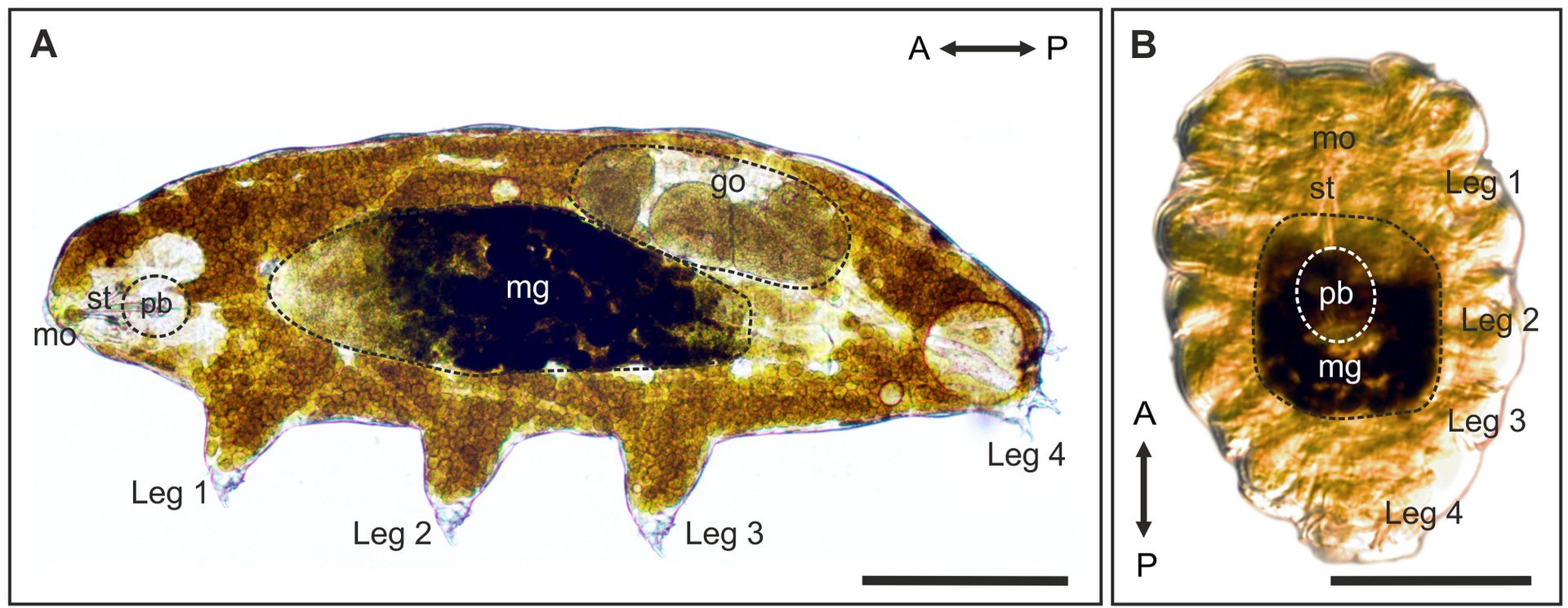
The species page adds a fifth animal, the tun model. Read Richtersius coronifer — the tun model: Ferdinand Richters described it in 1903 as Macrobiotus coronifer; it is now the type species of Richtersius, in the family Richtersiidae erected by Guidetti et al. 2016. Halberg, Jørgensen & Møbjerg 2013 measured an ~87% body-volume reduction into a tun built by muscles. It was one of the two desiccated species on TARDIS, FOTON-M3, 2007. A century of worldwide records is likely a species complex — some papers write “Richtersius cf. coronifer.”
Look at Shop: posters and coloring books coming soon.
Issue 04
Issue 04 · Week of 13 October 2026
Published 13 October 2026
This week: a research digest
Dicer expansions. Weinberg et al. 2025, BMC Genomics (doi:10.1186/s12864-025-12050-6), “Lineage-specific expansions of the Dicer gene family in tardigrades.” The paper covers expansions of the dicer gene across 10 tardigrade species, each with 2 to 4 copies. There was an ancient duplication shared with arthropods, plus expansions specific to individual lineages.
A resistome atlas called AEGIS — bioRxiv preprint, not yet peer reviewed. Ito et al. 2025 (doi:10.1101/2025.06.10.658754), “A Functional Atlas of the Tardigrade Resistome Reveals a Diverse Molecular Toolkit for Extremotolerance.”
A new Ramazzottius species. Vecchi & Stec 2025, Organisms Diversity & Evolution (doi:10.1007/s13127-024-00662-x), describe a new gonochoric Ramazzottius species from an Italian rock pool, closely related to R. varieornatus. The name, copied from the paper, is Ramazzottius claudii.
CAHS12 in synthetic cells — bioRxiv preprint, not yet peer reviewed. Xi et al. 2025 (doi:10.1101/2025.08.07.669088) study the CAHS12 protein in giant unilamellar vesicles (GUVs) as synthetic cells. Title: “Cytoplasmic Abundant Heat-Soluble Proteins from Tardigrades Protect Synthetic Cells Under Stress.”
A moss walk, if you have a lens
If the PDFs can wait, look at a damp moss clump with a hand lens or a microscope. Naming the species can wait; looking is the point.
Look at Shop: posters and coloring books coming soon.
Ito et al. and Xi et al. are bioRxiv preprints, not yet peer reviewed.
Issue 03
Week of 6 October 2026
Published 6 October 2026
This week: new species note
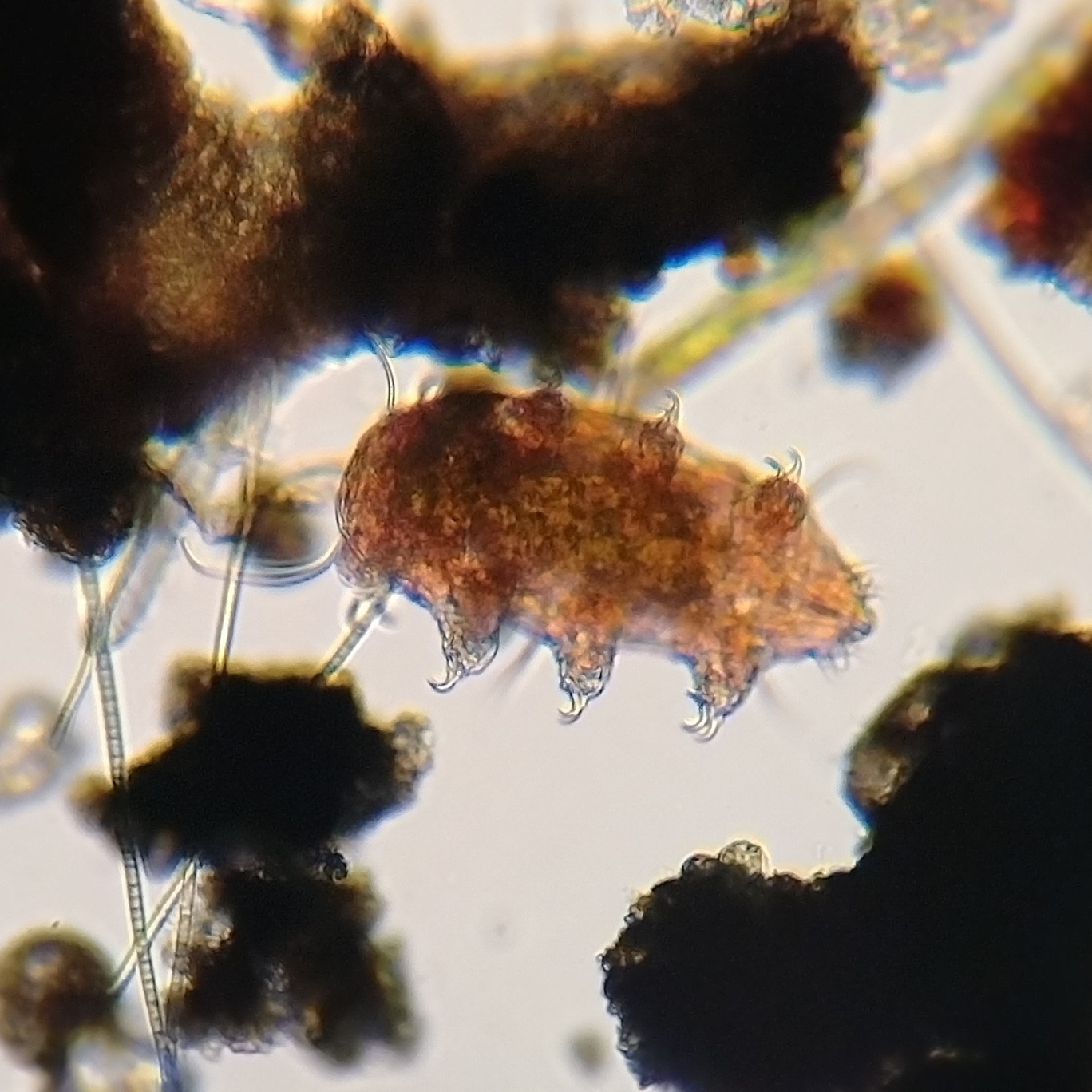
The species page adds its first heterotardigrade. Read Echiniscus testudo — the armored one: the animal Doyère named in 1840, a neotype from Montmartre Cemetery, and anhydrobiosis with the authors’ hedges still attached. The roughly 20-year revival is an anecdotal record, as described by Roszkowska et al. 2023; in controlled tests, urban and natural populations survived anhydrobiosis for up to 120 days.
Look at Shop: posters and coloring books coming soon.
Nobody keeps a pet E. testudo culture, because the species cannot be cultured yet.
Issue 02
Week of 29 September 2026
Published 29 September 2026
Hello again from the cabinet. Four papers and a short note, all of them real: a first genome for Isohypsibioidea, a stress-tolerance review with a new Echiniscus testudo transcriptome, a CAHS peptide motif for freezing red blood cells, a cell study about recovery after stress, and a radioprotection perspective. The hedges stay where the authors put them.
1. Papers, hedges left on
First genome for Isohypsibioidea. Makarova D. et al. 2026, Functional & Integrative Genomics (doi:10.1007/s10142-026-02055-z). This is the first genome assembly and annotation for the superfamily Isohypsibioidea — the most basal group within the order Parachela — represented by the freshwater species Cucumibius annulatus. The draft genome (73 Mb, N50 = 96.4 kb, BUSCO 87.1%) was assembled from short-read data. Canonical tardigrade heat-soluble protein families (CAHS, SAHS, MAHS) are present but at lower copy numbers than in other sequenced Parachela. Trehalose biosynthesis enzymes are absent, consistent with the non-anhydrobiotic lifestyle of the species — not every tardigrade does the tun trick.
A review, plus a new transcriptome. Kamilari M. et al. 2026, Molecular Ecology (doi:10.1111/mec.70471). This review looks at how omics technologies, particularly RNA sequencing and other RNA-based methods, are changing the picture of tardigrade stress tolerance, and it provides a new transcriptome for Echiniscus testudo. Proposed mechanisms include antioxidant defence, DNA protection and repair, and protein folding, plus protection of three-dimensional structure from the molecular and cellular level to the whole animal. Special focus is on peroxins and filament-forming proteins, which likely play a vital role in sustaining the tun state — a state in which desiccated tardigrades suspend metabolism and uphold structural integrity until resuspension in water.
A CAHS peptide motif for red blood cell cryopreservation. Xi T. et al. 2026, ACS Applied Materials & Interfaces (doi:10.1021/acsami.6c12445). This is a lab and mouse study of a short CAHS-derived peptide motif — CAHS is a family of tardigrade proteins — used with trehalose for glycerol-free red blood cell cryopreservation. Red blood cells cryopreserved with the CAHS-motif and trehalose formulation achieved a post-thaw recovery of 89.0 ± 0.6% and excellent blood compatibility (99.0 ± 0.7%), outperforming the conventional glycerol-based method. Post-thaw cells retained normal morphology, volume, and key functional activities in vitro and effectively corrected anemia in an APH-induced hemolytic anemia mouse model without detectable pro-inflammatory responses.
Better recovery, not a better acute response. Darch W. et al. 2026, Scientific Reports (doi:10.1038/s41598-026-57258-y). Human microvascular endothelial cells expressing the tardigrade proteins CAHS3, MAHS, LEAM, and Dsup were tested for heat shock and hyperosmotic stress. In vitro, those cells showed up to a 45% decrease in population metabolic activity after 24 h incubation in hyperosmotic media without recovery. Acute hyperosmotic stress followed by a 24 h recovery period brought a significant increase in population metabolic activity for CAHS3 (186%), Dsup (202%), and LEAM (223%), while MAHS (161%) showed non-significant increases; heat shock followed by a recovery period showed significant increases for CAHS3 (198%), Dsup (182%), MAHS (195%), and LEAM (156%). The effects are context-dependent: better recovery after stress, not a better acute stress response.
Radioprotection, as an outlook. Cui Z. et al. 2025, Frontiers in Pharmacology (doi:10.3389/fphar.2025.1713914), “Radioprotection redefined…”. This review treats tardigrade-inspired radioprotection as drug discovery still facing hurdles — scalable bioprocessing, macromolecule stability, immunogenicity, and targeted delivery — and the applications it names (safeguarding healthy tissue during cancer treatment, reducing casualties in nuclear accidents, shielding astronauts on deep-space missions) are the authors’ outlook, not results in hand.
2. A pinch of moss, if you want a walk
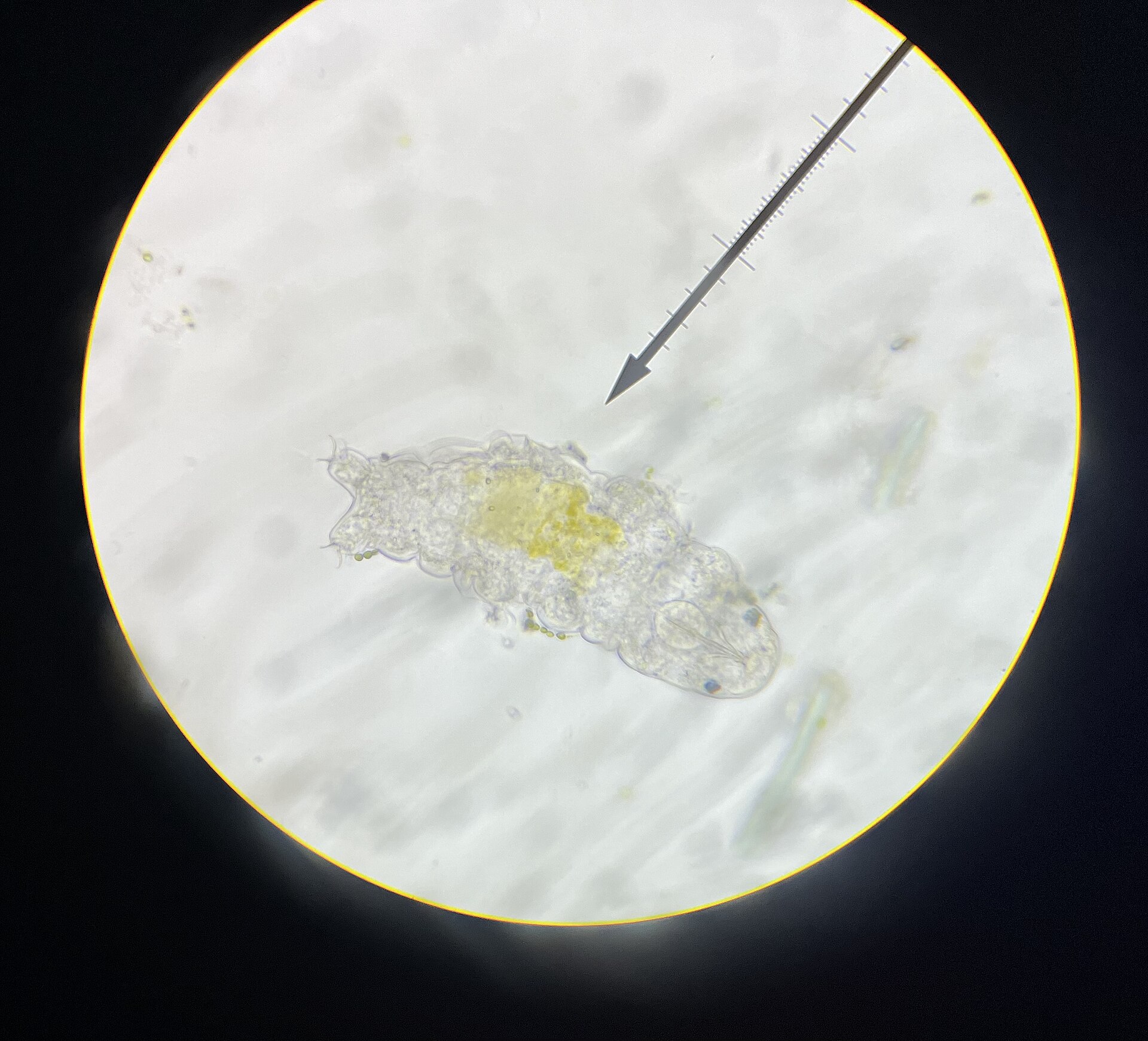
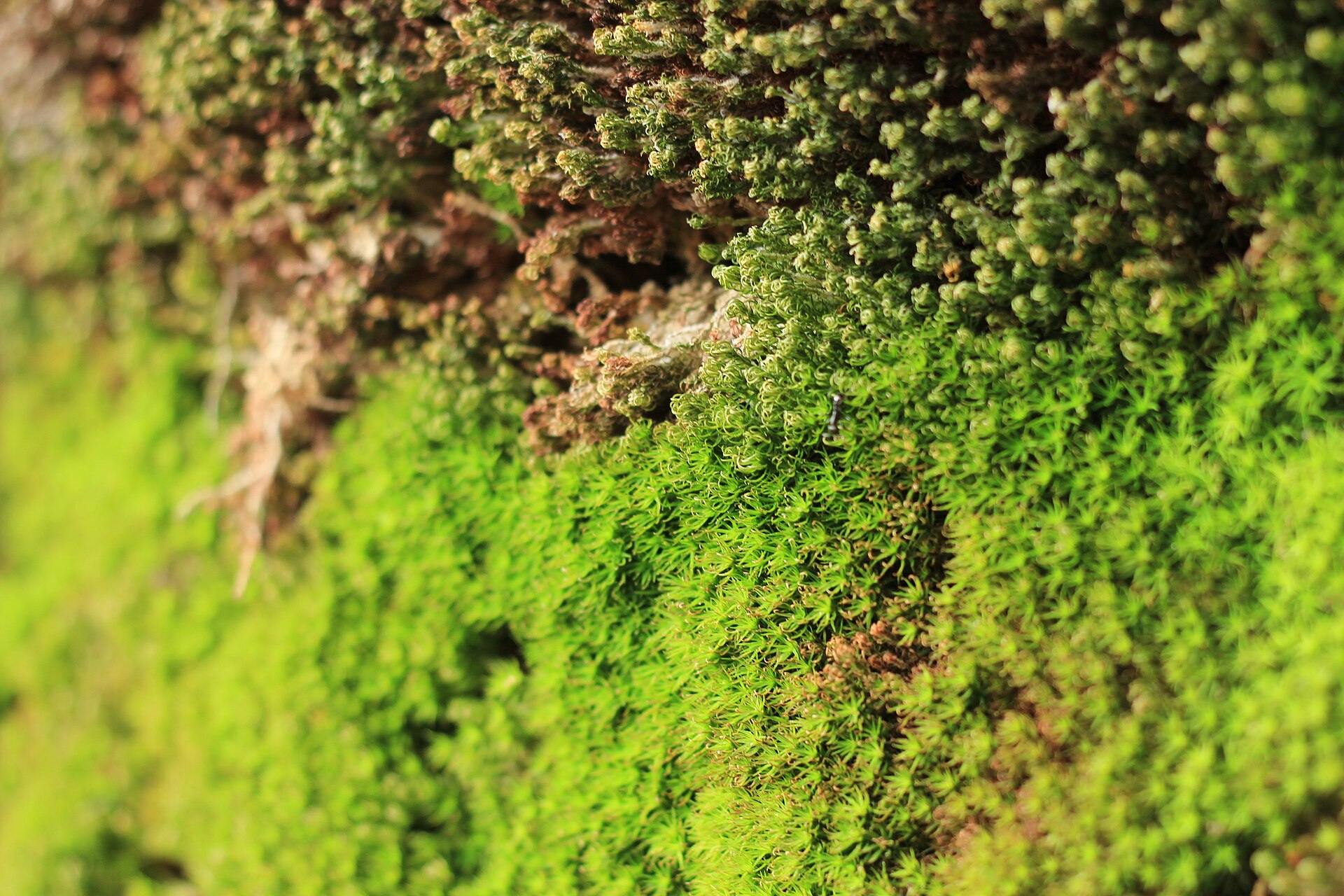
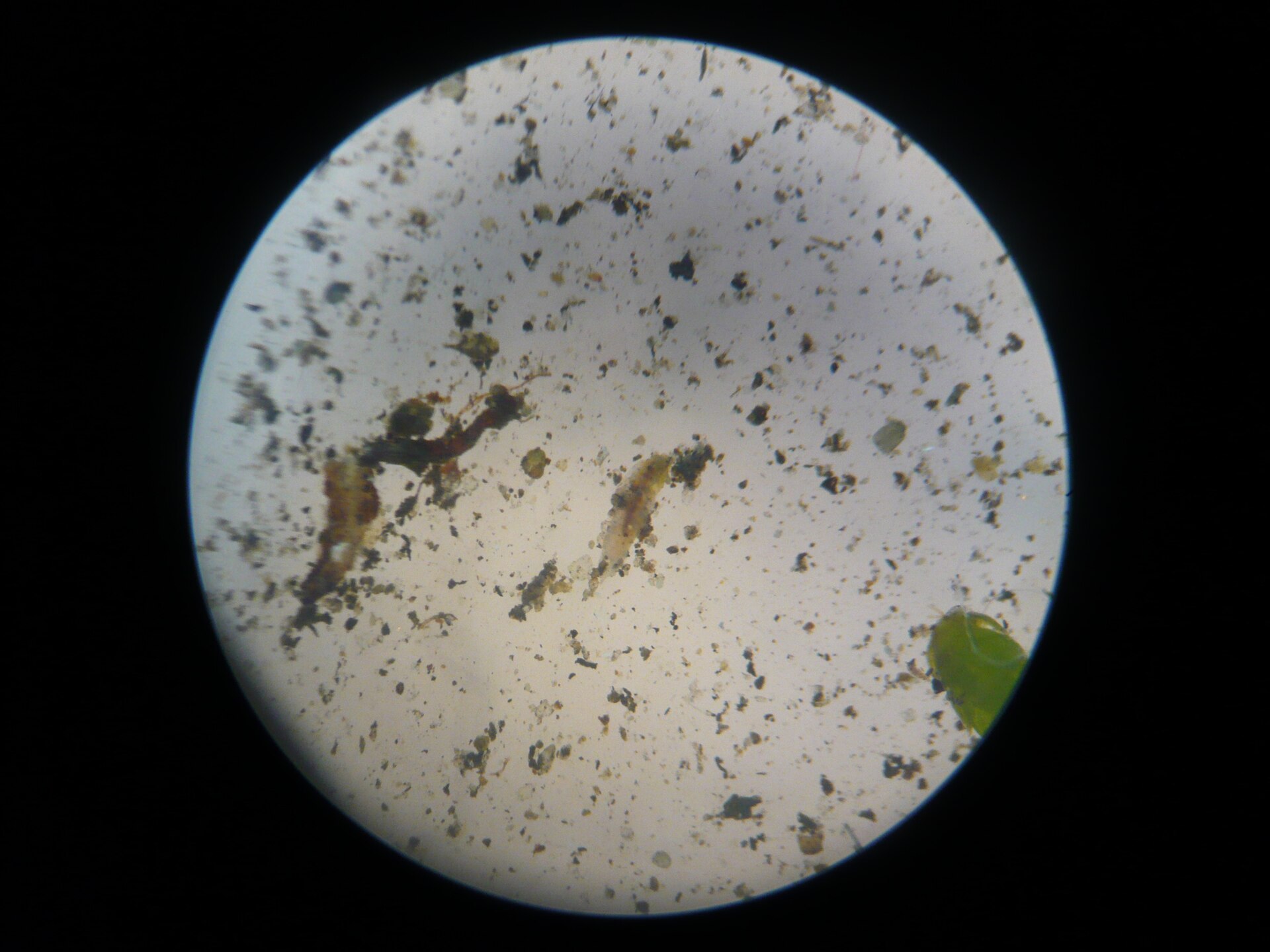
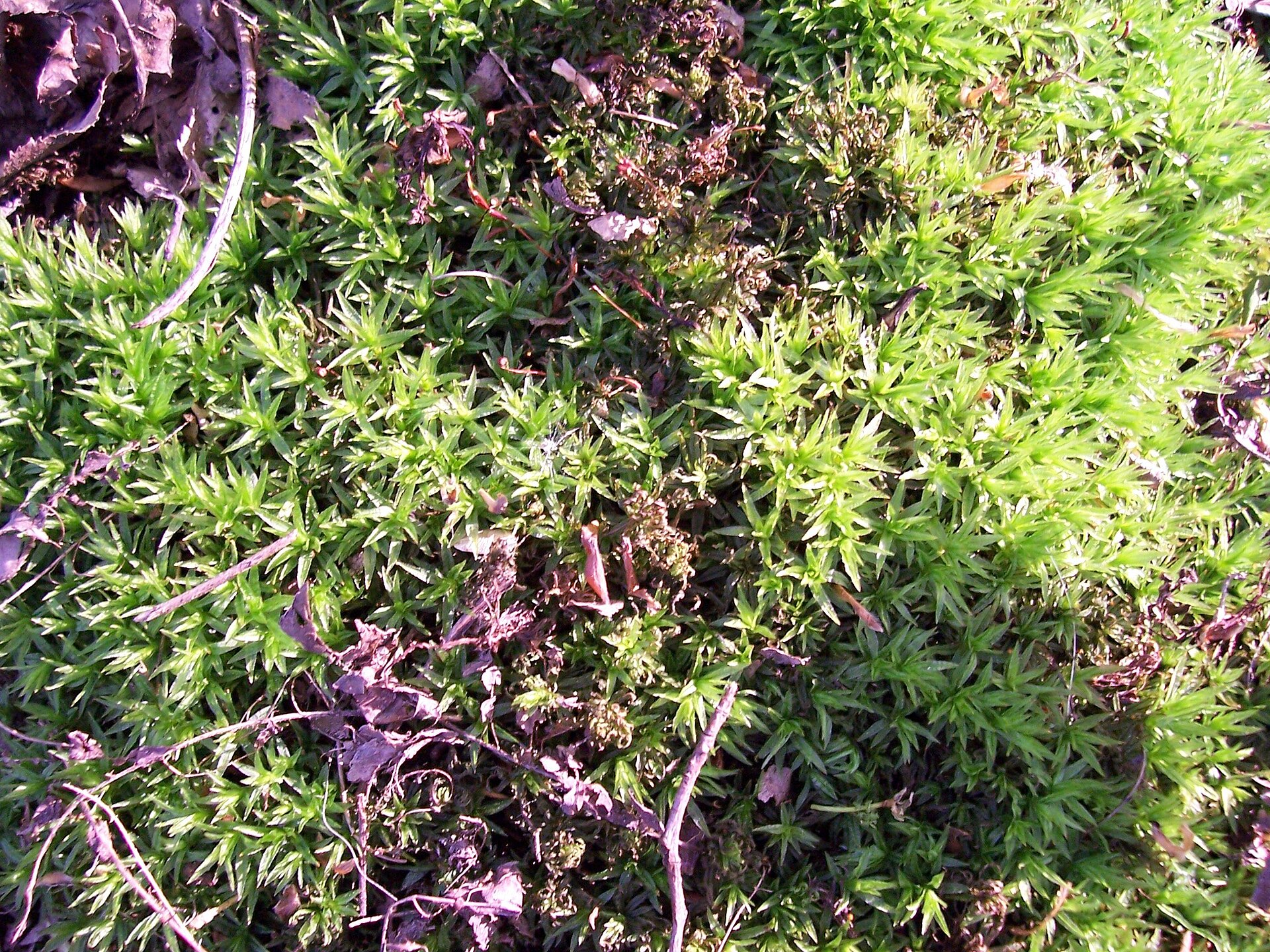
Want an animal instead of a PDF? Soak a small pinch of dry moss in rain or spring water — not chlorinated tap water — in a shallow dish for a few hours or overnight. Squeeze or swirl it, let the debris settle, and scan the water or the sediment under a dissecting scope, or a hand lens plus a phone, at low magnification. You are looking for slow, eight-legged, plump walkers. Questions and “is this debris?” photos belong on r/tardigrades; a picture that is actually the animal can go to iNaturalist Tardigrada.
3. Sources, and the shop shelf
All five DOIs are now on Sources. Posters and coloring books are still coming soon on Shop — no inventory, and no fake SKUs.
If the abstract says “proposed” or “likely,” that word stays in the sentence. Not “nearly immortal” — not this week, not any week.
Active and tun states of Richtersius coronifer. Kamilari et al. write that filament-forming proteins likely help sustain the tun. Halberg, Jørgensen & Møbjerg, CC BY 4.0.
Echiniscus testudo — Kamilari et al. include a new transcriptome for this species. Robert Martin, CC BY 4.0.Low magnification, a plump body, and a pointer so the animal doesn’t vanish when you blink. DSparrow14, CC BY-SA 4.0.Moss on rock. A pinch of the dry stuff is enough for the dish. Debojyoti Dey, CC BY-SA 4.0.A wet mount under the scope: sediment, a little green, and small animals to sort from the junk. Bioblast, CC BY-SA 3.0.
Issue 01 · stub
Week of 1 September 2026
Published 5 September 2026
Hello from the cabinet. waterbears.info v1 is live, which is itself the news: a static hub with Commons images, three species pages, and a space timeline that still begins with FOTON-M3.
1. Hub launch, with receipts
If you are new here, read Species in this order: H. exemplaris (the lab animal formerly filed as H. dujardini), R. varieornatus (Dsup and rapid drying), M. tardigradum (the FOTON carnivore). Then Cryptobiosis so the next viral video does not say “they live in space.”
2. What we are re-reading, not “new this week”
Hashimoto et al. 2016, Nature Communications — still the genome paper people quote without opening. Yoshida et al. 2017, PLOS Biology — still the comparative paper that explains why two hypsibiids are not interchangeable. Jönsson et al. 2008, Current Biology — still the space result. Links live on Sources.
3. Community weather
Northern moss is wet again. If you extract, a pinch is enough; rooftop Grimmia and gutter sediment outperform rare woodland carpets. Log finds on iNaturalist Tardigrada if you have a photo that is actually the animal. The r/tardigrades weekly threads remain the friendliest place to ask “is this a tun or a piece of debris?”
4. Shop cards, not a storefront
Posters and coloring books are listed as coming soon on Shop. No inventory, no fake SKUs. If you want something to hang this week, print a Commons plate and credit the author.
Next digest: when there is a real paper, a real mission update, or a real community method worth repeating. We will not pad this page with imagined press releases.
Moss as habitat, not as metaphor. Go look at a wall.